Blog

  • Practice based research

    Live Action Video support

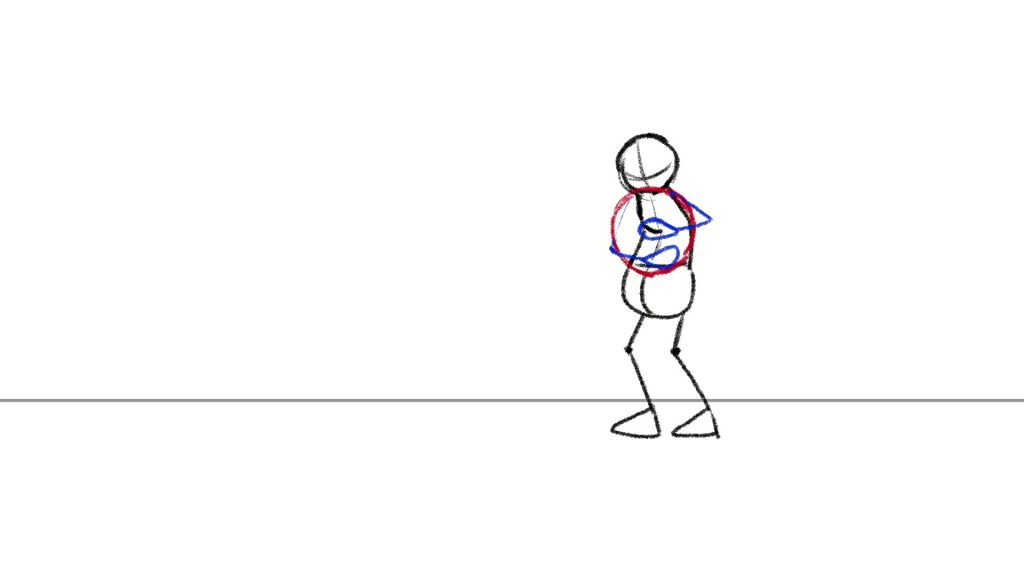
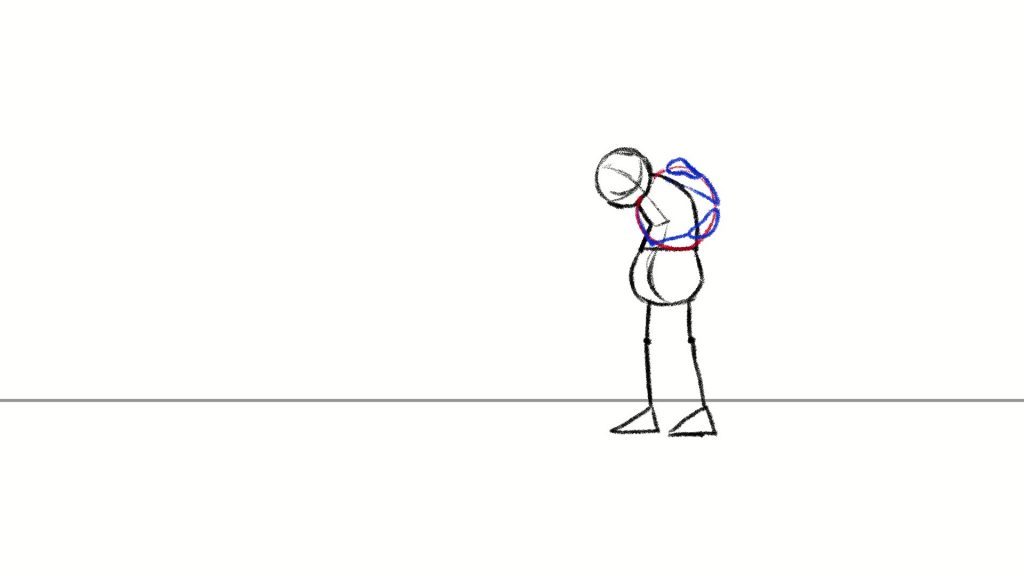
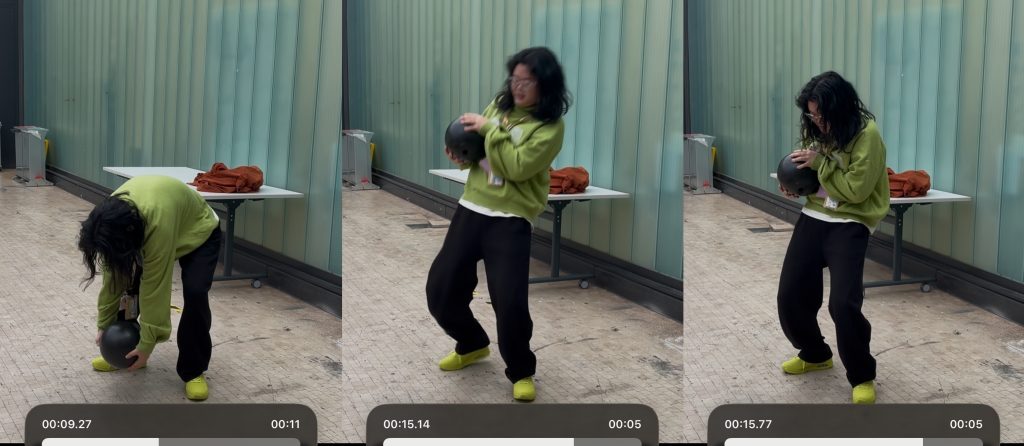
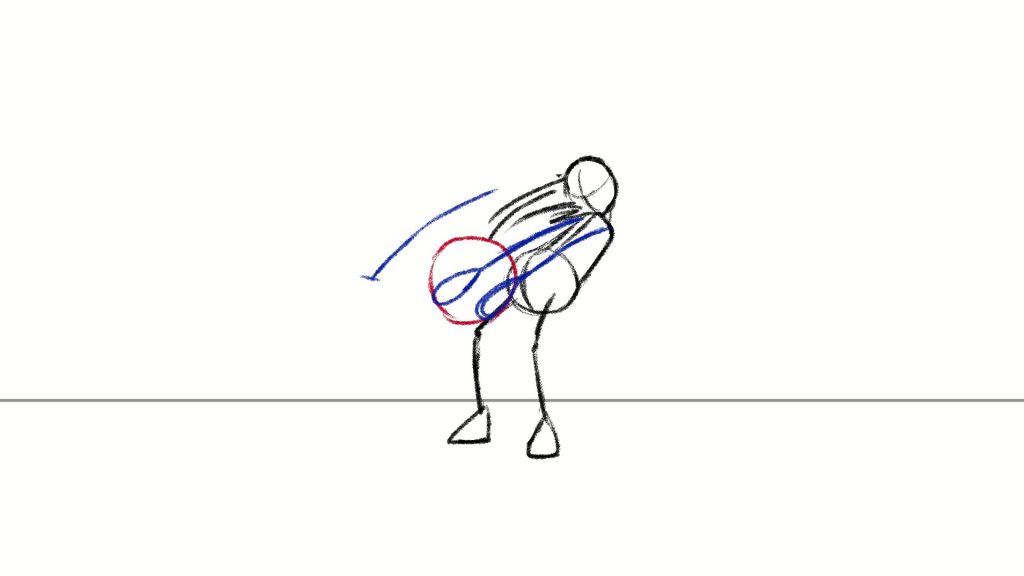
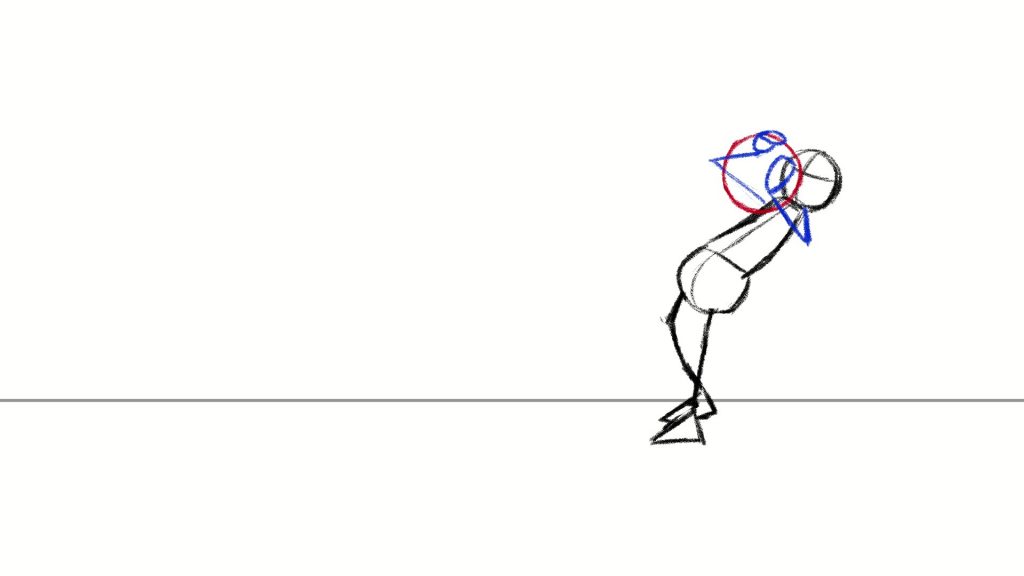
    When performing for the live action video, I decide to perform a struggling lift. During the process, I will hesitate how to pull up the ball at the beginning and tremble after the lift. However, when applying to the animation, so many actions should be modified. The process of testing the lift pose may confuse the audience so it’s not necessary. When drawing the character on the knees, anticipation should be shown. I need to add shaking to knees and bending the whole body like a shrimp, which I can’t do in reality.

    During the lifting, I find that our actions are not always look like a perfect curve because we are not as capable as dancers to control our body. However, animators can manipulate the character to form a beautiful curve, with strong and dramatic stretch of arms and the head.

    In real life I only step backwards once so I exaggerate it into three times. Due to three times stepping backwards as an anticipation, the character leans forward when stopping. This kind of reflection of force in physics adds more vigour to the lift acting. The lift is a straight forward action and the following body shaking slow down the pace, telling the audience it’s about to come to an end.

    When acting in real life, it is obvious to see me slowly breathed a sigh of relief from my chest and shoulder. When it comes to the stick figure, these tiny changes are not evident enough for the audience to catch. As an offbeat after completing all the lift, I want to add more vivid performances, reaching the same effect as ‘breathe a sigh of relief’. Therefore, as a new ending design, I draw the character slowly look at the ball after a few moments that the ball is tightly locked in arms. The character gently adjust the position of the ball while bending legs also turn straight as a normal standing pose. From these multiple actions, the character are totally relaxed. At last, the character mildly pat the ball, seems satisfied with this outcome.
  • Animation principle analysis

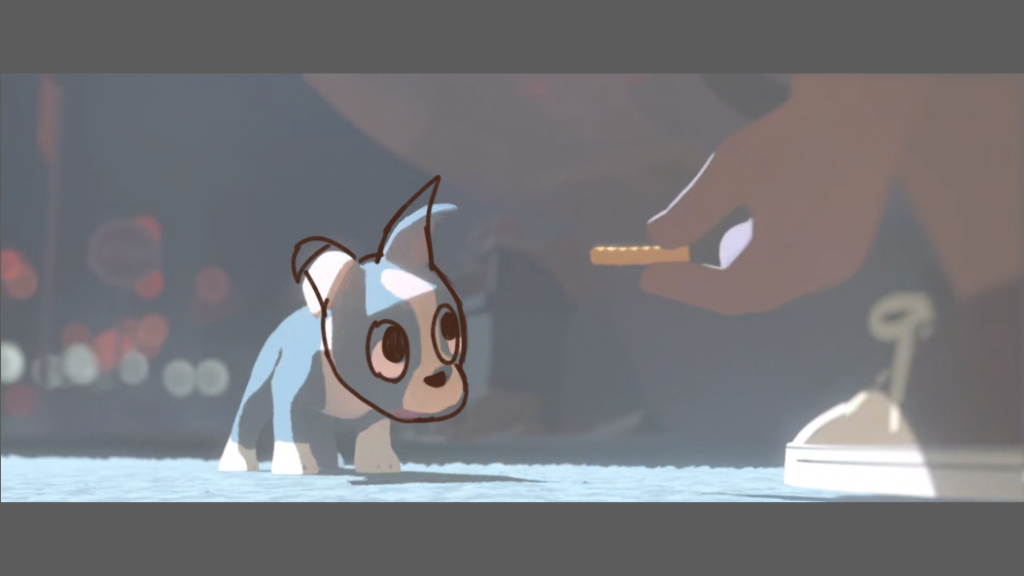
    Reference film-Feast (Disney, 2014)

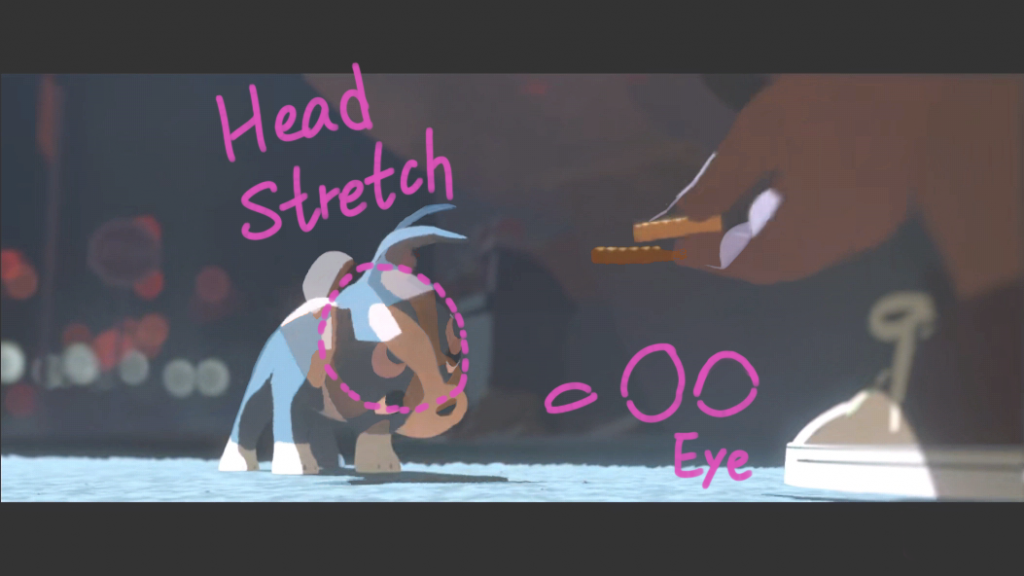
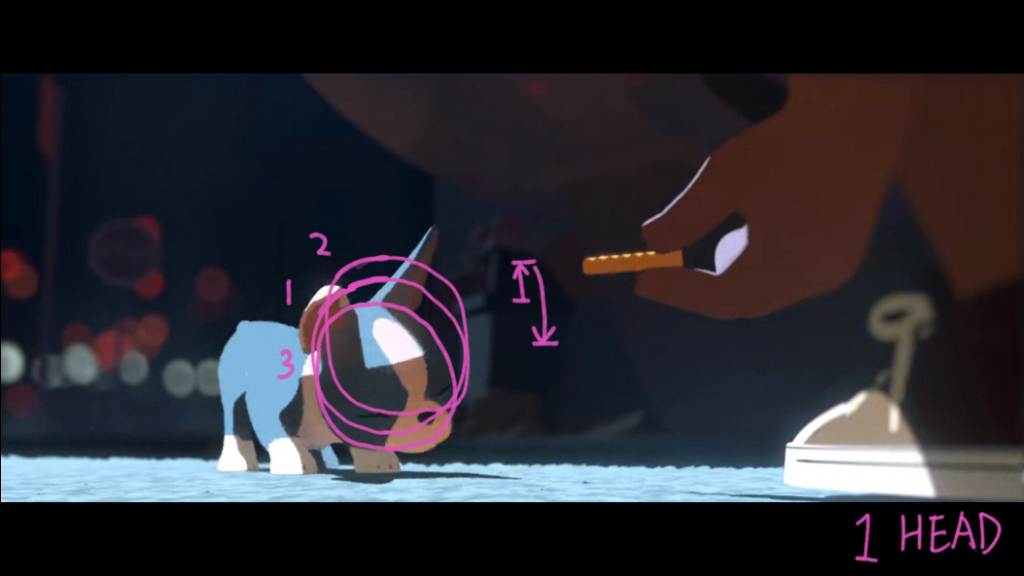
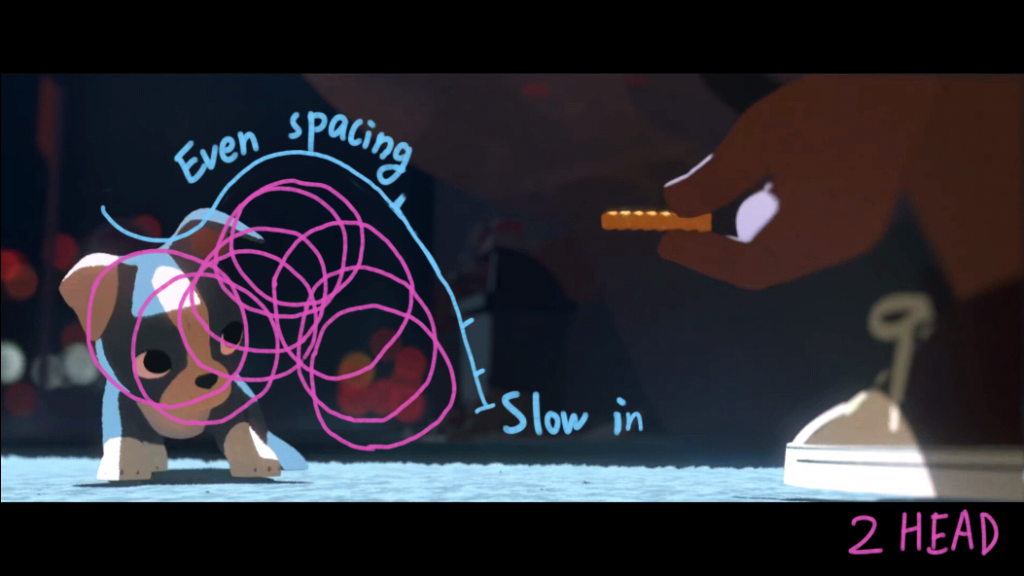
    The dog looks at chips on the ground and later notice the man’s hand at the beginning. Its eyes are widely open firstly and its head and ears stretch longer, showing it’s surprised. From the inbetweens of eye blinking , there are more than one frame showing eyes widely open. It gives more time for acting in anticipation to blink rather than batting the eyelids so that audience can pay attention to this facial expression.

    Eyes blinking, head lowing and ears stretching are a sequence of chain reaction, according to the principle of overlap. These motions are preparing for the jump afterwards, according to anticipation principle.

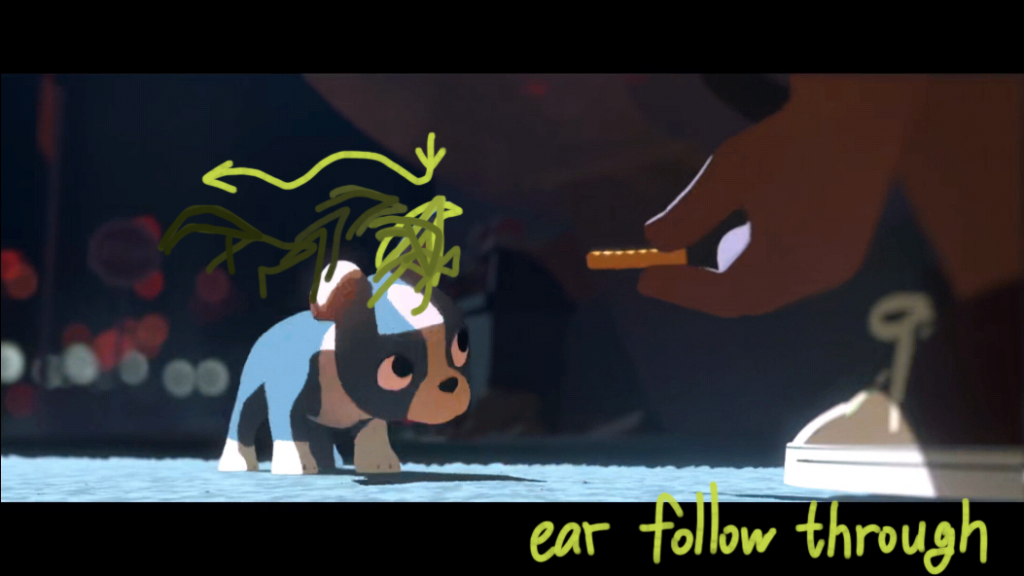
    In each part’s motion, I draw the curved motion paths. All paths compose beautiful arcs so that the dog seems natural, vivid and convincing in reality, especially when it comes to ears’ follow through with the head. When starting, the head’s moving speed changes from slow to fast, forming a dramatic gradient. Dog’s ears, taking the right one as an example, keep straight when its head begins to low down. Then ears show a more complex transforming because they are soft and consist of several joints. Due to inertia, ears move later than the head like two flowing flags attached to the head.

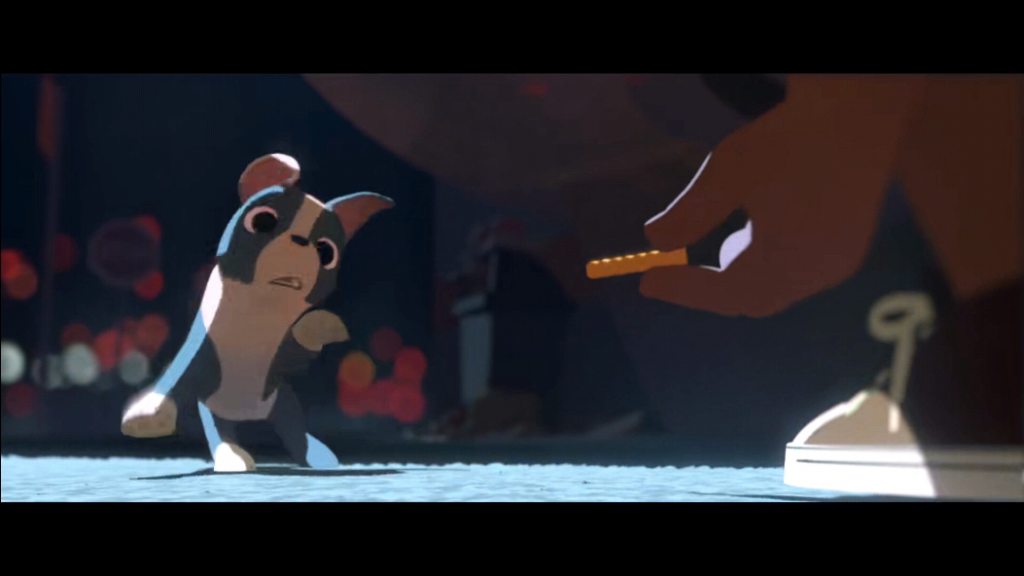
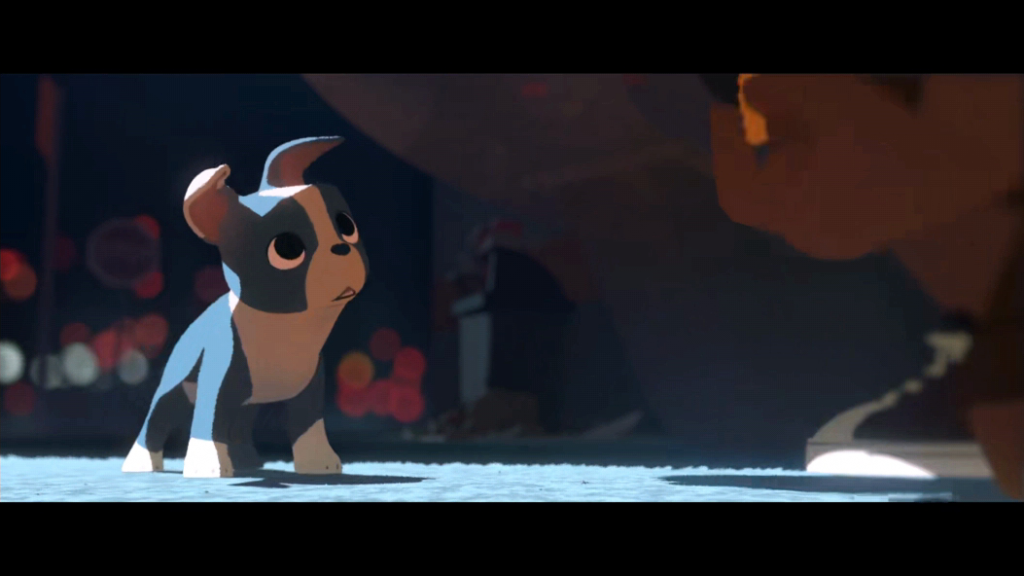
    There is also overlapping on the body, two forelegs evidently move in different paces, one following another. Those uneven details bring the dog to life. In some overshot frames, the dog even leans backwards. As a follow through, dog raises its nose and ears tend to face the sky a little. After this dramatic jump, the dog slowing walk closer to the hand, appealing by chips. Big gap in motion speed let the audience feel the puppy’s fear and hesitation. Finally dog leans foreword with the head up, showing it has the bravery to accept the human.

    All these amazing performance happen in about one second, the only improvement I could think of is the stretching one. If I didn’t play the film frame by frame I won’t be able to notice there’s a stretch. It’s too fast for the audience to catch. The stretch of head goes well with wide open eyes so this frame could be more exaggerated, like this, or let that one frame last longer.

  • Simulated work experience reflection

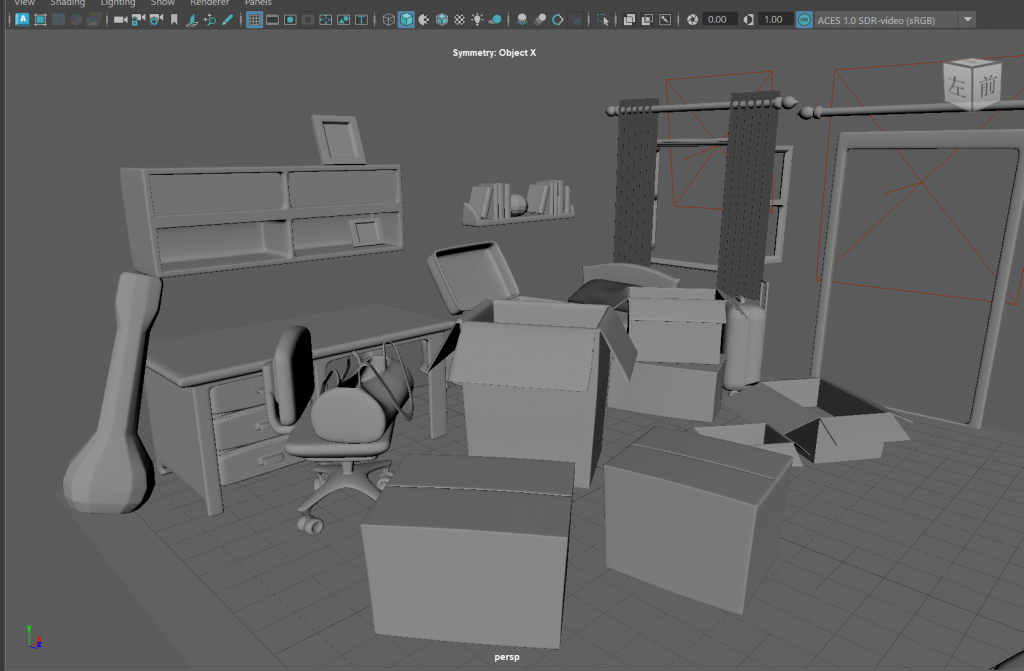
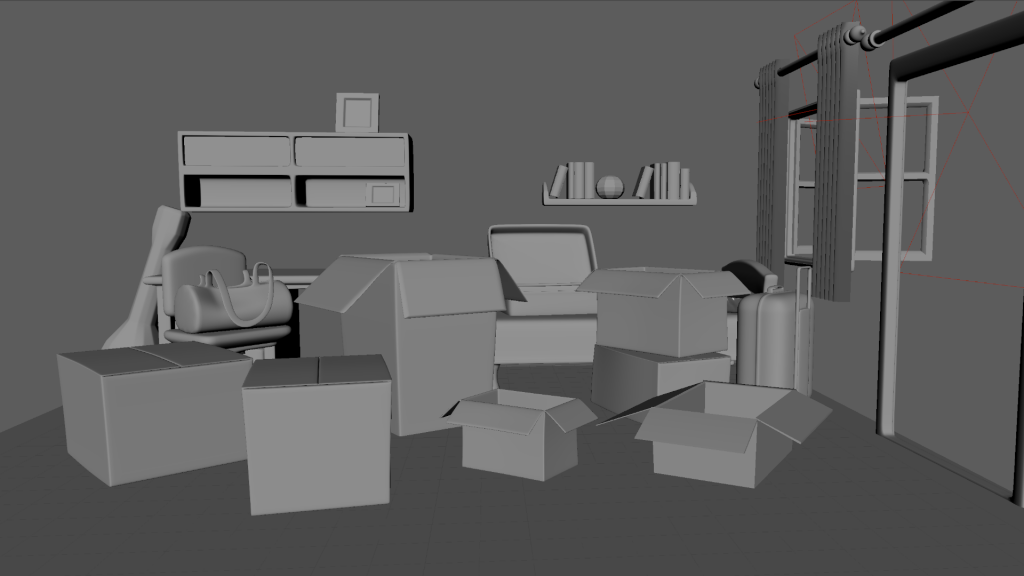
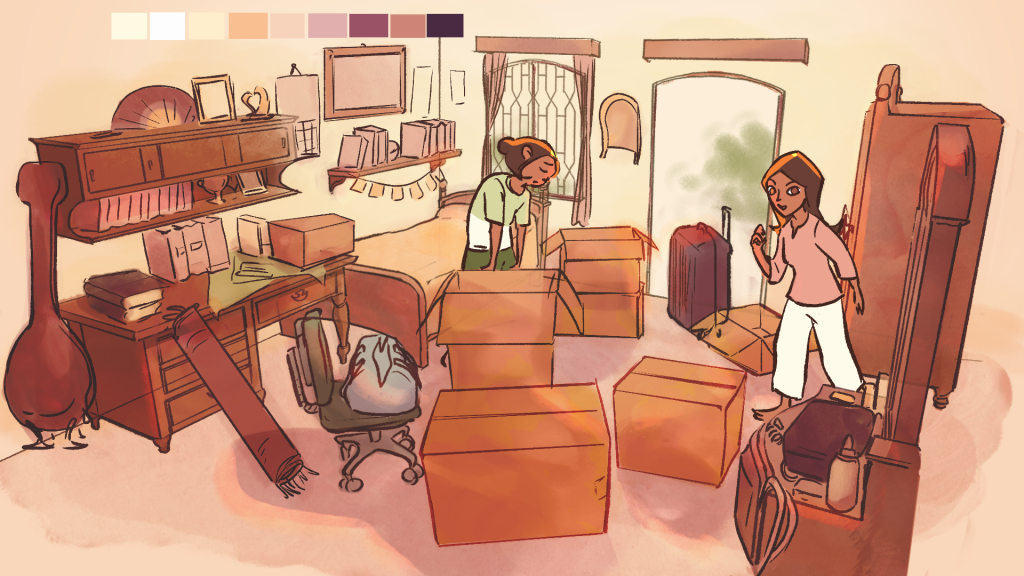
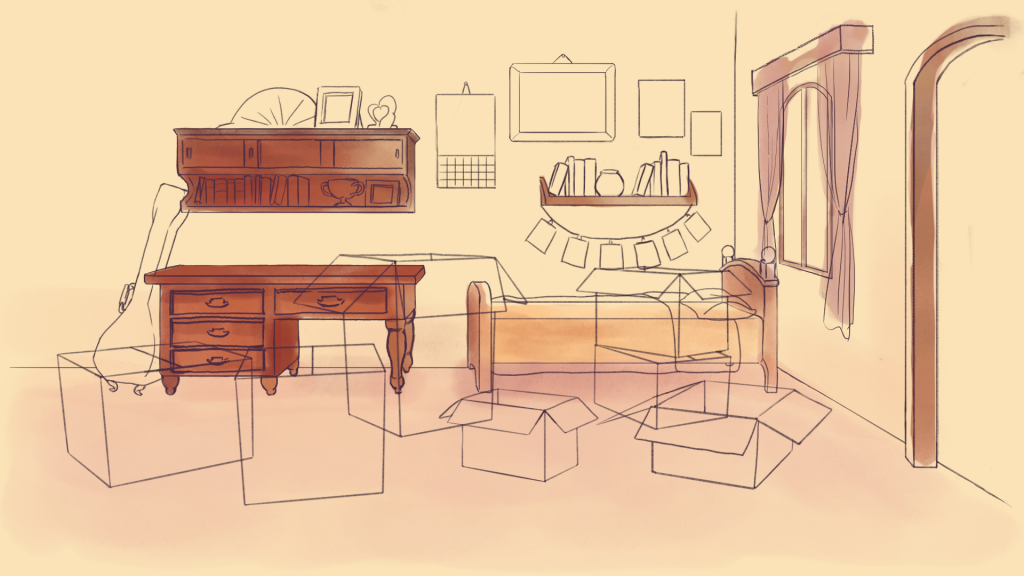
    During the simulated work experience with Debotriya, I was responsible for helping the 3D props and painting the background. She made the workflow very clear to me and shared many materials with me. Firstly, I made some props for the 3D scene according to the lay out designs which Debotriya gave me, including curtains, the bed cushion, tanpura case, some frames and books. It went well with Maya, and I would draw the background based on this 3D model.

    3D model in Maya
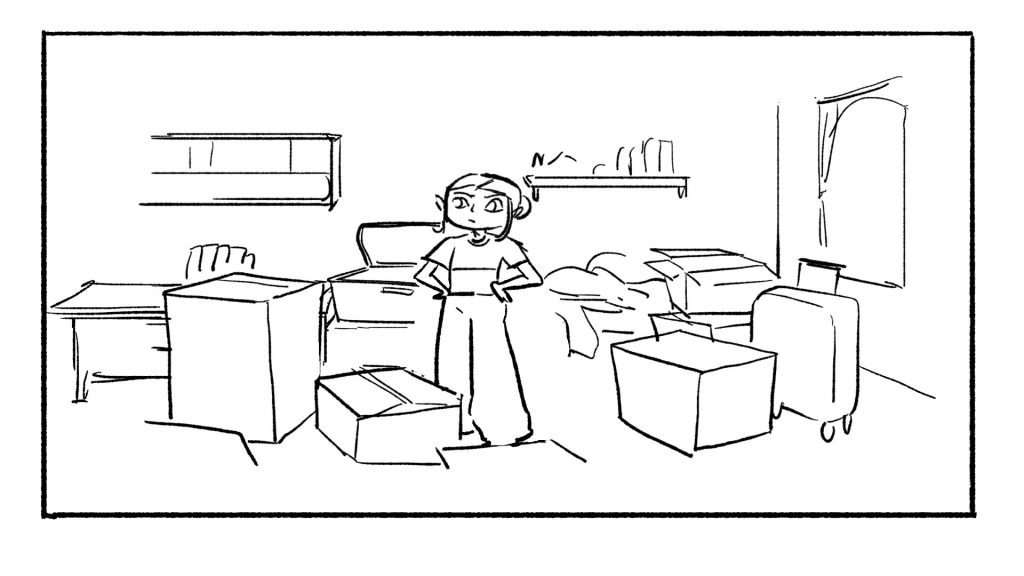
    Shot 1-from the animatics
    Shot 1-3D model reference

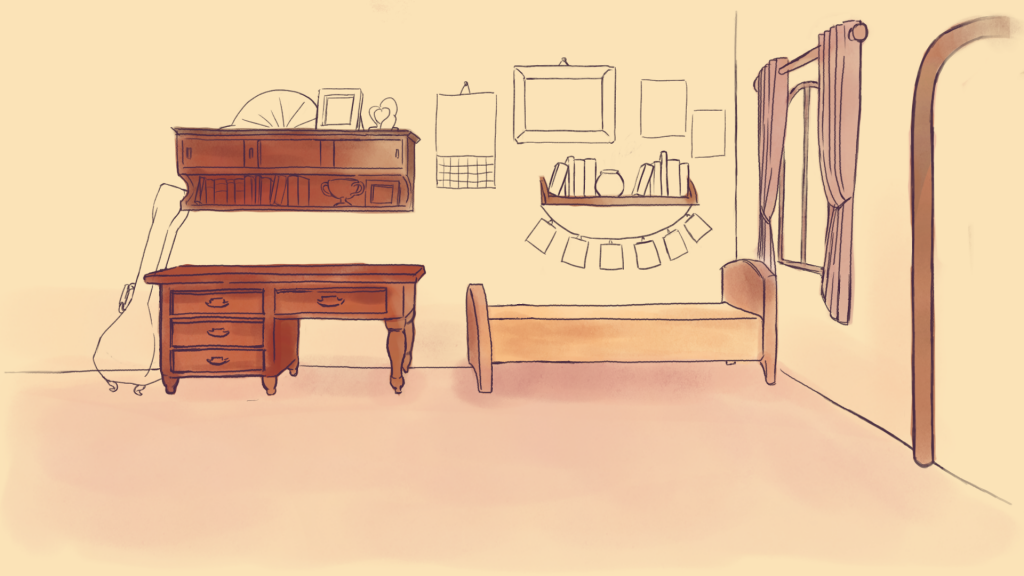
    When it comes to painting, we found difficulties with digital drawing devices such as different color displays of the same swatches. Besides that, I made few mistakes on the background details so I need to redraw, such as shaking contour lines, wrong arc of door and bed, wrong proportion of props on the wall.

    Original background design from Debotriya
    Background clear-1st version
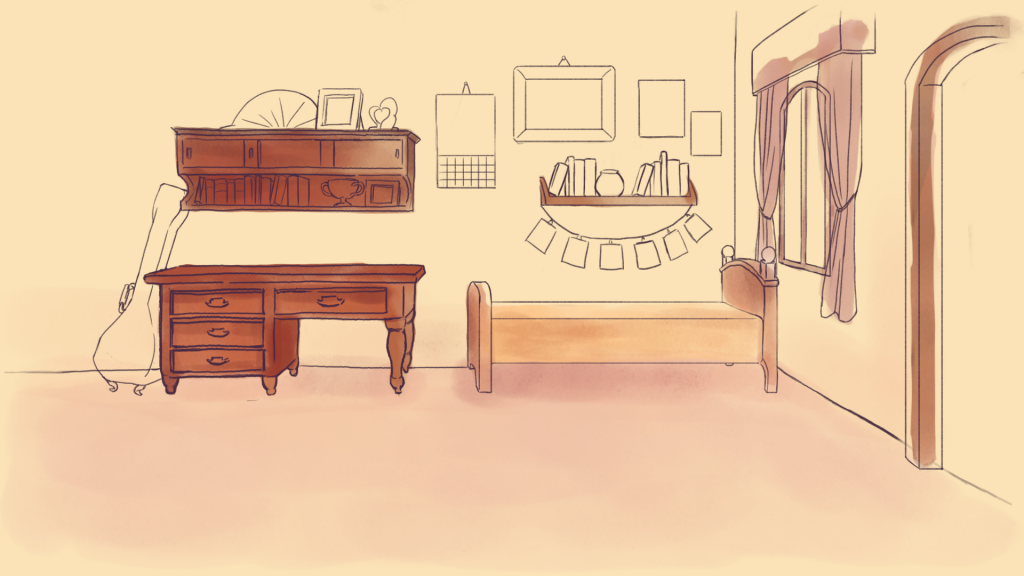
    Background clear-2nd version

    After redrawing most contour lines with shift shortcut in Photoshop and fix those detailed issues on the scene setting, I was given feedback that this background can be more delicate with more flexible contour lines. On the other hand, more colors should be added to the four corners of the background, fading out at the edge as the lines do. In this way can the whole aesthetic be attached to the watercolor style.

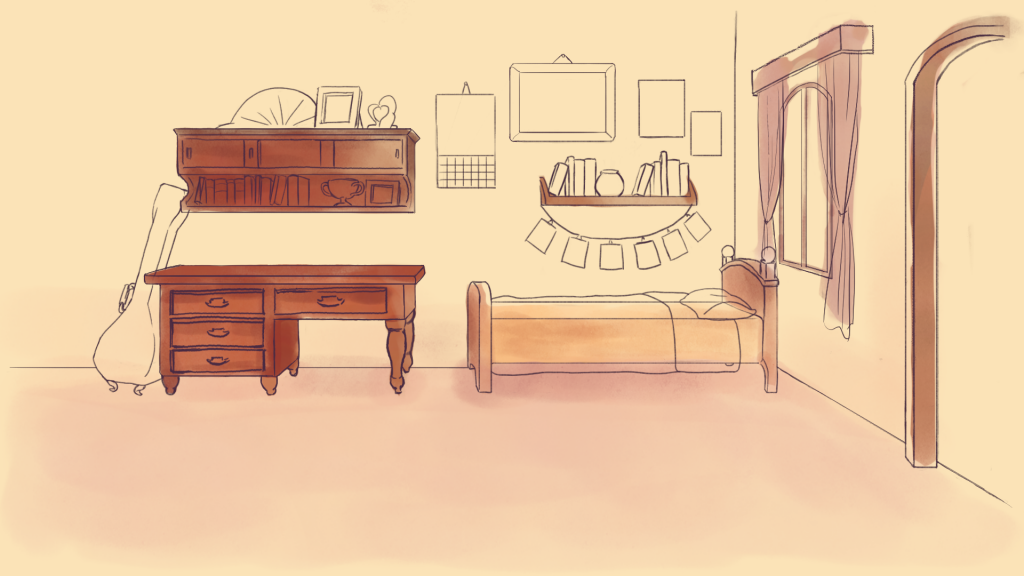
    Background clear-3rd version
    Background clear with boxes-3rd version

    Learning from professional lay out artists she showed me on the Internet let me realize I could have improved the lines from altering the line weight. From the perspective and coloring lessons I have already known these on paper but I found it challenging making full usage of pressure sensitivity to make a difference. In the future I need to practise digital painting more, focus on these subtle and tiny changes which might lead to a distinct outcome.

    In brief, I enjoyed helping others with their animation because I could learn from people who had a totally different style from me. Moreover, experienced seniors could remind me of details I tended to ignore in the past. I was grateful for all the lessons learnt from Debotriya’s designer mindset and I should cultivate this and bring this to practice then.

  • Hello world!

    Welcome to myblog.arts. This is your first post. Edit or delete it, then start blogging!